

Visualizing Energy & Green Tech Systems with 3D Engineering Animation: A Strategic Guide from Concept to Operations
February 2, 2026
3D Engineering Animation for Hydrogen, Carbon Capture, and Power-to-X Technologies
February 2, 2026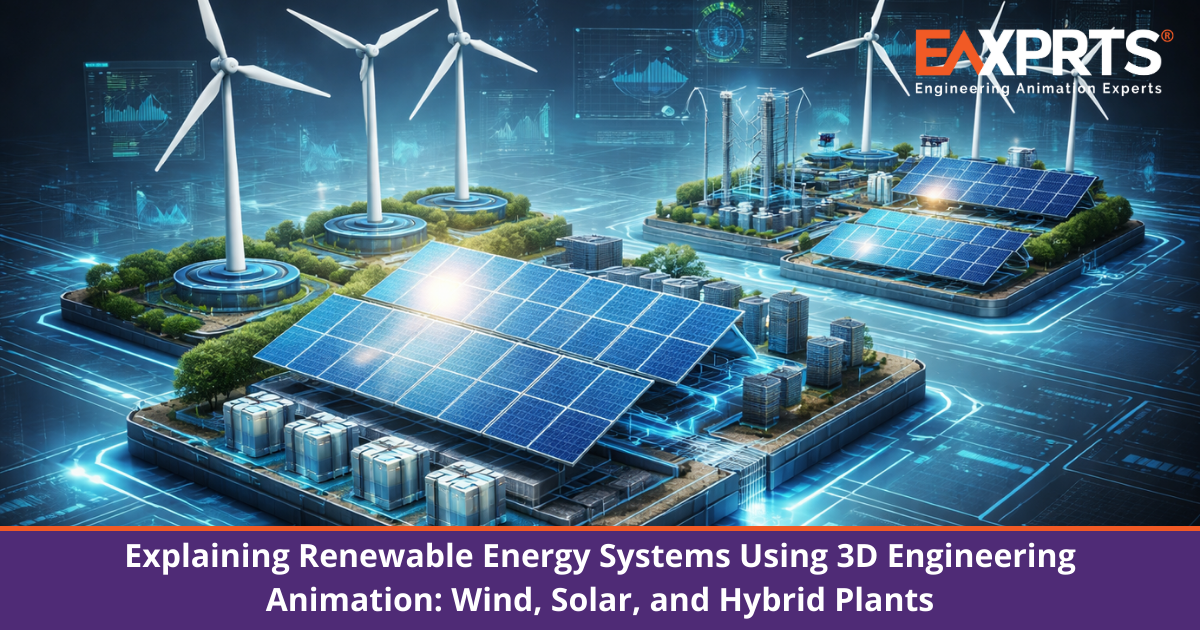
Explaining Renewable Energy Systems Using 3D Engineering Animation: Wind, Solar, and Hybrid Plants
Renewable energy systems are often presented as clean, simple alternatives to conventional power generation. In reality, modern renewable plants are highly engineered systems that integrate mechanical, electrical, civil, and digital technologies at scale. From wind turbines with multi-stage gearboxes to utility-scale solar plants with complex inverter architectures and grid interfaces, renewable projects are far from straightforward.
As renewable capacity expands globally, the challenge is no longer just designing efficient systems, it is communicating those systems clearly to the wide range of stakeholders involved in development, approval, financing, construction, and operation. This is where 3D engineering animation plays a critical role.
Why Renewable Energy Systems Are Technically Complex
At a high level, renewable energy plants appear modular and repetitive. However, beneath that apparent simplicity lies significant technical complexity.
Multi-Disciplinary Integration
A typical renewable energy project integrates:
- Mechanical systems such as turbine drivetrains, trackers, or mounting structures
- Electrical systems including generators, inverters, transformers, switchgear, and grid interconnections
- Civil and structural elements like foundations, access roads, cable trenches, and substations
- Control and monitoring systems for performance optimization, safety, and grid compliance
Each discipline is designed using different tools and standards, yet all must work together seamlessly once the plant is built.
Scale and Spatial Challenges
Renewable plants are geographically large:
- Wind farms spread across kilometres of terrain
- Solar plants covering hundreds of acres
- Hybrid plants combining multiple generation and storage technologies
Understanding spatial relationships, equipment spacing, access routes, maintenance clearances, and safety zones, is essential but difficult to convey through 2D drawings alone.
Regulatory and Grid Compliance Requirements
Renewable systems must comply with:
- Grid codes and protection requirements
- Environmental and land-use regulations
- Safety standards for personnel and the public
Explaining compliance using static documents often leads to misinterpretation or prolonged review cycles.
Wind Turbine Assembly, Gearbox & Power Flow Visualization
Wind energy systems are among the most mechanically sophisticated renewable technologies. While a wind turbine may appear externally simple, its internal systems are highly complex.
Assembly and Installation Visualization
3D engineering animation is widely used to explain:
- Tower section stacking and bolting sequences
- Nacelle lifting and placement
- Blade installation methods and safety constraints
These animations are particularly valuable during:
- Installation planning
- Contractor coordination
- Safety briefings
They help teams understand not just what to install, but how and in what order.
Gearbox and Drivetrain Operation
Inside the nacelle, multiple subsystems operate simultaneously:
- Rotor hub and blade pitch systems
- Main shaft and bearings
- Multi-stage gearbox or direct-drive generator
- Cooling and lubrication systems
3D animation allows stakeholders to visualize:
- Torque transfer from blades to generator
- Gear reduction stages
- Heat dissipation and lubrication paths
This is invaluable for OEMs explaining technology to customers, and for operators training maintenance teams.
Power Flow from Turbine to Grid
Beyond mechanical operation, animation can clearly show:
- Electrical generation inside the nacelle
- Power transmission through down-tower cabling
- Collection systems and substations
- Export to the grid
This end-to-end view is difficult to grasp through schematics alone, especially for non-electrical stakeholders.
Solar Plant Layouts, Inverters & Maintenance Zones
Utility-scale solar plants are often underestimated in complexity because they lack moving parts. In practice, they involve extensive electrical infrastructure and precise layout planning.
Plant Layout and Orientation
3D animation helps explain:
- Panel orientation and tilt angles
- Tracker movement (for single-axis or dual-axis systems)
- Row spacing to avoid shading and allow access
This is particularly useful when presenting designs to landowners, regulators, or investors unfamiliar with solar engineering.
Inverters, Transformers & Electrical Architecture
Solar plants rely on:
- String or central inverters
- Step-up transformers
- Medium- and high-voltage distribution
3D animation can illustrate:
- DC to AC conversion
- Electrical aggregation
- Protection and isolation systems
This clarity supports grid approval discussions and internal design reviews.
Maintenance Zones and Safety Access
Maintenance planning is a critical aspect of solar plant performance. Animation helps visualize:
- Access roads and walkways
- Safe working distances around live equipment
- Module replacement procedures
For operators, these visuals become long-term training and safety assets.
Hybrid Energy Systems (Solar + Wind + Storage)
As renewable penetration increases, hybrid systems are becoming essential for grid stability and reliability. These systems combine multiple technologies, each with its own behavior and constraints.
Complexity of Hybrid Integration
Hybrid plants integrate:
- Variable renewable generation (solar and wind)
- Energy storage systems (typically batteries)
- Advanced control systems for load balancing
Understanding how energy flows dynamically between these components is challenging without visual tools.
Visualizing Energy Flow and Control Logic
3D engineering animation can show:
- Power generation under different conditions
- Charging and discharging cycles of storage systems
- Interaction with the grid during peak and off-peak periods
This is particularly valuable for:
- Investor presentations
- Utility coordination
- Regulatory approvals
Supporting Design and Operational Decisions
By visualizing system behavior, stakeholders can better evaluate:
- System resilience
- Redundancy strategies
- Operational flexibility
Use Cases: Sales, Training, Safety & Approvals
3D engineering animation supports renewable energy projects across multiple business and operational functions.
Sales and Business Development
For OEMs and EPCs, animation helps:
- Explain technical advantages clearly
- Differentiate offerings without oversimplification
- Reduce sales cycle duration
Rather than relying on lengthy explanations, teams can use animation to convey value quickly and accurately.
Training and Knowledge Transfer
Renewable plants often operate for 20–30 years, during which personnel changes are inevitable. Animations provide:
- Consistent training material
- Visual SOP references
- Faster onboarding for new staff
Safety Communication
Safety is critical in renewable projects involving:
- High voltage
- Heavy lifting
- Remote or harsh environments
Animation enables clear communication of:
- Hazard zones
- Safe work procedures
- Emergency scenarios
Regulatory and Stakeholder Approvals
Regulators and authorities benefit from visual explanations of:
- System layout
- Environmental safeguards
- Safety mechanisms
This often leads to smoother and faster approval processes.
How 3D Engineering Animation Improves Stakeholder Alignment
One of the most significant benefits of 3D engineering animation is its ability to align diverse stakeholders around a common understanding.
Bridging Technical and Non-Technical Audiences
Engineers, financiers, regulators, and operators all view projects differently. Animation provides a neutral, visual reference that:
- Reduces misinterpretation
- Minimizes assumptions
- Encourages productive discussion
Reducing Rework and Late-Stage Changes
When stakeholders understand the system early, they are more likely to:
- Identify concerns upfront
- Approve designs with confidence
- Avoid late design changes
This directly impacts cost, schedule, and risk.
Supporting Collaborative Decision-Making
3D animation transforms meetings from document reviews into:
- Visual walkthroughs
- Scenario discussions
- Informed decision sessions
Conclusion
Renewable energy systems are no longer niche or experimental, they are critical infrastructure. As their scale and complexity grow, so does the need for clear, accurate, and trustworthy communication.
3D engineering animation enables renewable energy stakeholders to:
- Understand complex systems faster
- Reduce technical and commercial risk
- Improve alignment across disciplines and organizations
- Support projects from concept through decades of operation
Rather than treating visualization as a marketing exercise, leading organizations are adopting engineering-grade animation as a core part of their renewable project workflows.
Talk to us today! Reach us on sales@eaxprts.com
👉Continue reading:
For a broader perspective on how 3D engineering animation supports energy and green tech projects across the full lifecycle, refer back to: Visualizing Energy & Green Tech Systems with 3D Engineering Animation.